


I was at an event, speaking with a CEO, and he asked me:
“How do we differentiate with marketing?”
I looked at him and said, “You don’t.”
He was confused at first, so I clarified.
You don’t differentiate with marketing.
You differentiate with the best product or service.
Sounds like common sense, right?
Well, as they say, common sense isn’t common practice.
Look, I know most of you can’t change the product. I’ll get to what you actually control.
But it starts with understanding why he was asking the wrong question.
The rules of the game changed
There have been major shifts in the market. Buyers have evolved.
New technologies, AI, more competition, more noise.
And when there’s a lot of competition and commoditisation wth AI, you need a lot of differentiation.
You need to separate yourself from the crowd.
If there’s a red sea of sharks, you need to make sure you’re swimming in a blue ocean.

So you run slightly different marketing. So what?
It’s the businesses with great products that add real, tangible value that win.
It’s all about the product. And you know what? It’s always been about the product.
What’s happening now is the market has become more aware.
People don’t just look at how slick your marketing is and then decide. They look at the product.
They try it out. They check the proof, the reviews, the testimonials.
If it isn’t great, they won’t listen to you. They’ll ignore your marketing entirely.
Bad products kill marketing. Great products amplify it.
Both camps are wrong
I’ve come across two schools of thought.
The “product is everything” people. If the product is great, word will spread and people will come. Marketing takes care of itself.
The “marketing is everything” people. The product doesn’t matter as much. As long as the ads and funnels are dialled in, you can sell anything.
They’re both wrong. It isn’t one or the other.
It’s both.
Focus only on product and you end up with something great that nobody knows about. That’s the “build it and they will come” fallacy. Customers don’t magically show up out of nowhere.
Focus only on marketing and you get unhappy customers and constant churn. You’re stuck acquiring new people just to replace the ones leaving.
When you wow customers they stick around, they talk about you, and your lifetime value goes up.
You’re not in the order business.
You’re in the reorder business.
That relationship pays everyone. Customers are delighted, your lifetime value increases, and you can reinvest more into acquiring new ones.
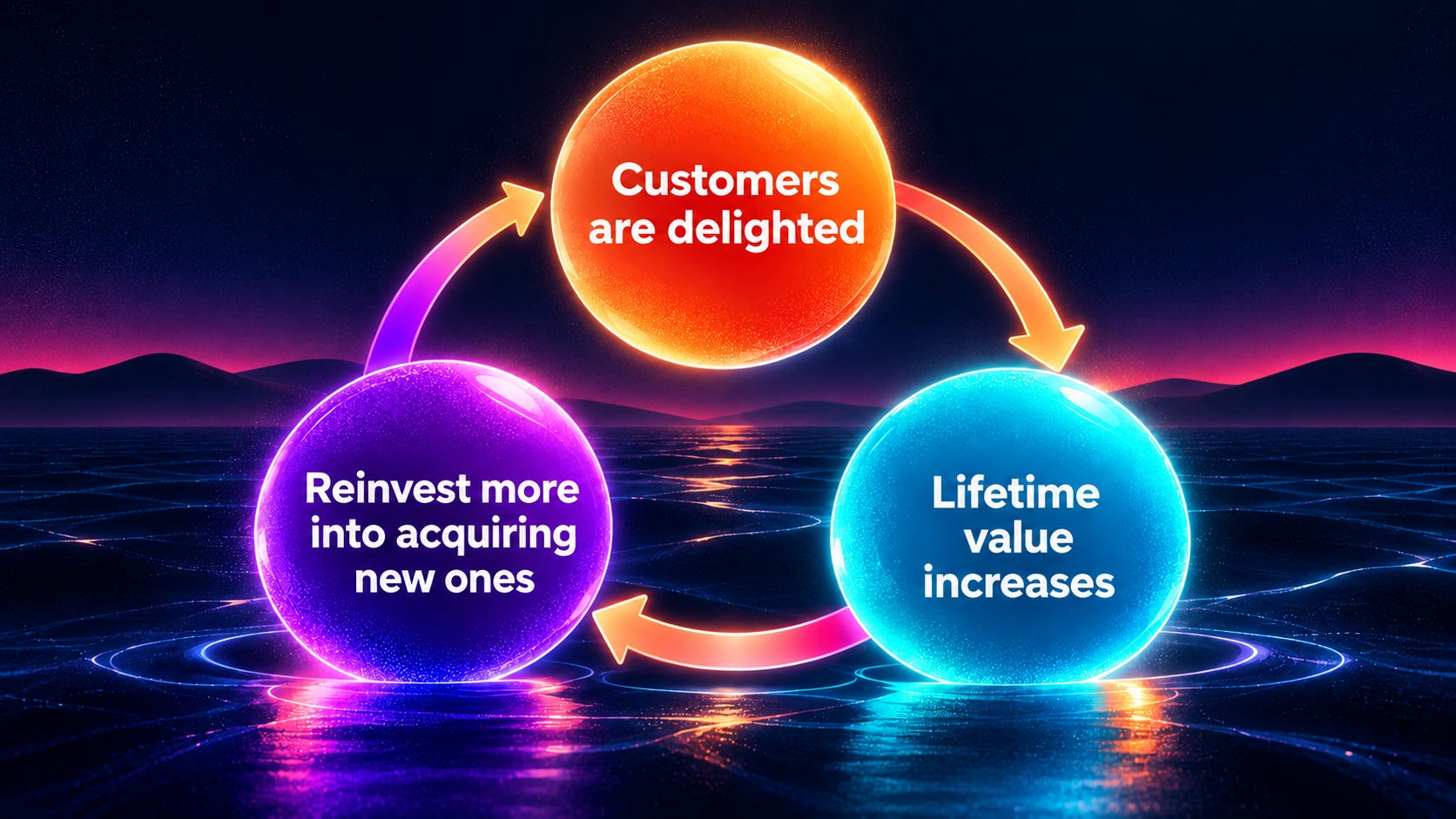
Your marketing draws people in. Your product keeps them.
But the market beats both
Here’s the part I got wrong for years.
I used to think great marketing determined a company’s success.
It doesn’t. It’s not the marketing that wins. It’s the market. The demand for what you sell.
Successful businesses have one thing in common. They either tapped into big, established markets with real demand, or they got the timing right and entered a market that was already exploding.
You could run the best campaigns of your life. If the demand isn’t there, your growth hits a wall.
So to grow big, you have to pick the right market.
We can’t control what people want. What we can do is position the product in a category people already know and already want.
“But I don’t own the product”
Right. Most of you can’t change the roadmap. You’ve been handed something built by other people and asked to go and win with it.
Here’s the thing: your job was never to invent a difference. Marketing can’t manufacture one that isn’t there. That’s what I meant when I told the CEO no.
Your job is to find the difference that already exists, and make sure the right people can’t miss it.
There’s no such thing as a boring product
As I write this, I work in cybersecurity.
Not the sexiest industry. But I believe you can make anything good.
Check out a few of my ads:
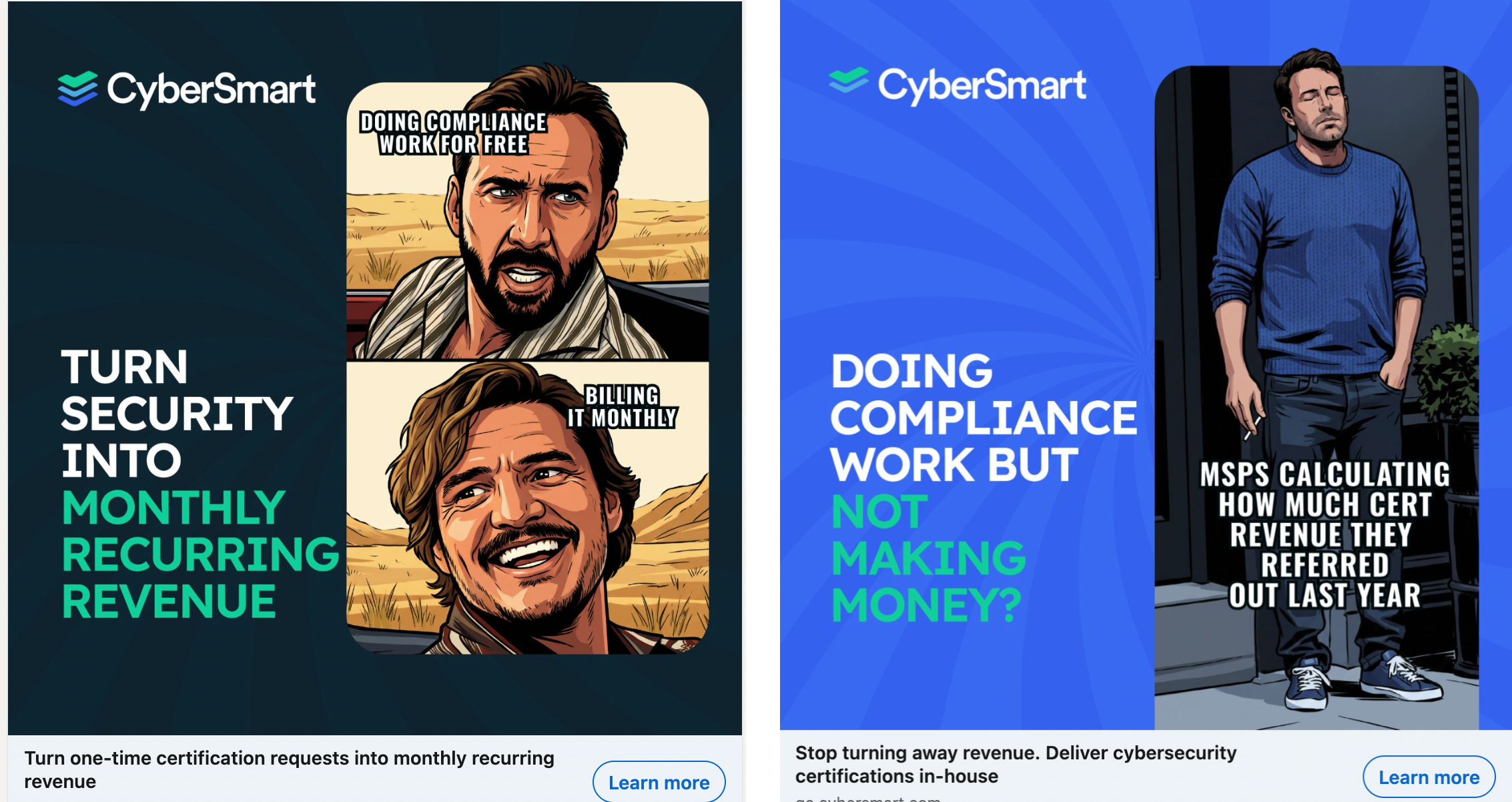
I’d die on this sword. I say it to everyone, whether it’s a CEO, a dev, a designer, anyone.
There’s no such thing as a boring product. Just boring marketing.
It’s my favourite line, because taste is a superpower.
Taste is the number one unfair advantage in marketing. In an AI world, taste is what cuts through, because every craft is being automated or commoditised.
Which is also why I try not to lean on the tactics thousands of other people are already running. I’d rather come at a market fresh and ask what unique value I can actually bring.
So here’s what standing out actually means, in three jobs.
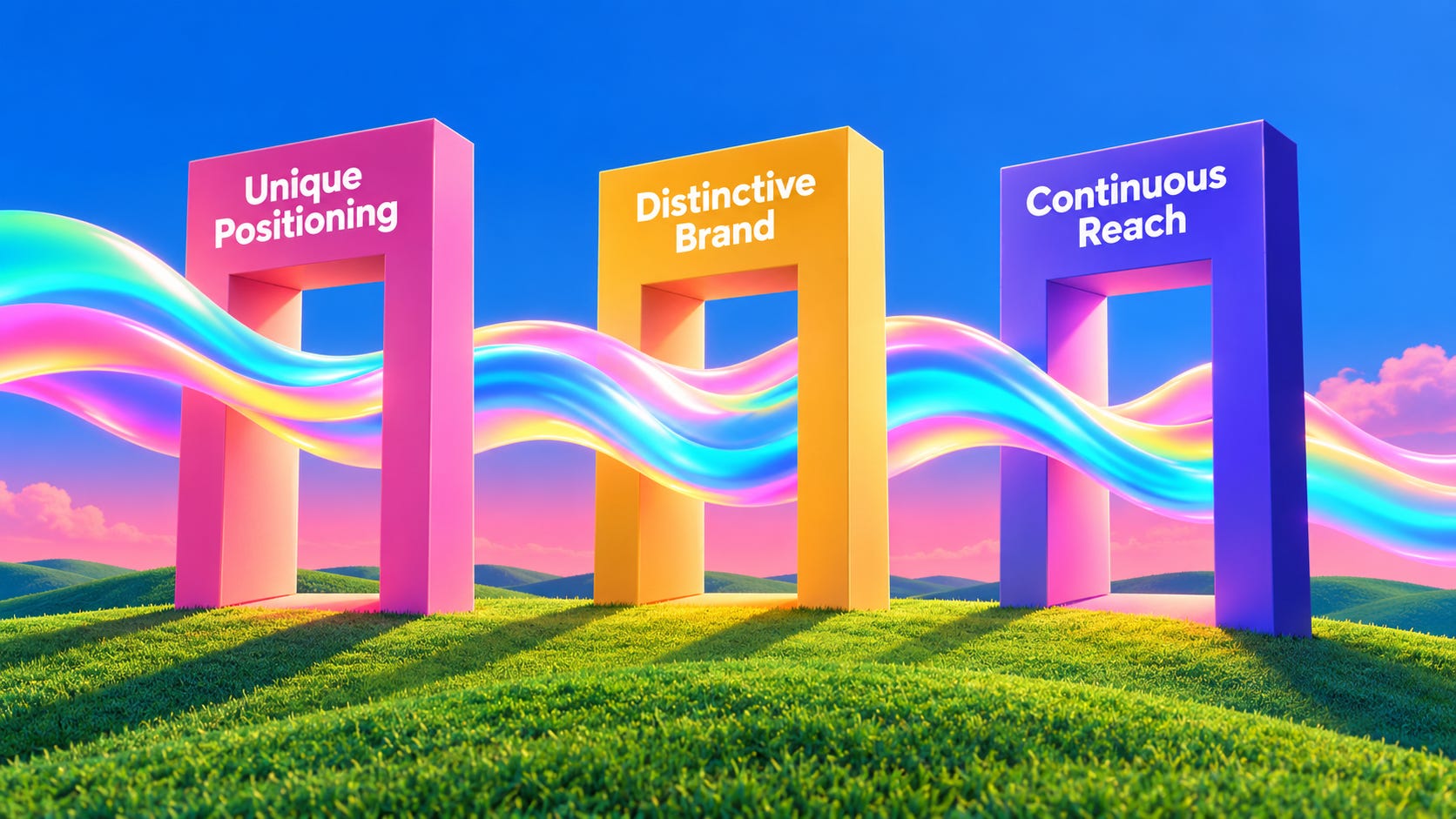
Stage 1: Unique positioning
Give them a reason to pick you
Being different for the sake of it doesn’t work. Nobody is shopping for “different.”
People are trying to get something done, and they pick whoever removes what’s in the way.
So start with the job, not the product.
What are people actually trying to achieve?
Write it in their words, starting with a verb. Products change. The job doesn’t.
Then find the frustration nobody is solving. Not the obvious one, the emotional one. Big players treat buyers like spreadsheets and miss it every time.
And define your audience by that frustration, not by job title. Who feels it most often, and most painfully? That’s who you’re for.
One thing people get wrong here: they reach for a clever label. Don’t. Use the words people already search for, then add one qualifier that shows your edge. If someone has to work out what you are, they won’t bother.
Try this: read your last five posts or ads. Could anyone else in your category publish them unchanged? If yes, you don’t have positioning. You have a category description.
Stage 2: Distinctive brand
Be recognisable
People don’t pick a brand because of what its logo means. They pick whatever comes to mind first.
So build a small kit of things people can recognise. A colour. A shape. A face. A phrase. Then use them relentlessly, in everything, for far longer than feels comfortable.
Skip the hidden meanings. Clever symbolism competes with memories people already have and it dates fast. Recognisable beats meaningful.
And you’re too close to know what’s working. Ask a customer what one small thing they remember about you. Whatever they say, turn it up.
One test I like before committing to anything: does it make your team slightly nervous? If it feels completely safe, nobody’s going to remember it.
Try this: take your last three ads and cover the logo. Would anyone know they’re yours?
Stage 3: Continuous reach
Show up at the right moment
Most of your market isn’t buying right now. So you’re doing two things at once. Staying memorable for the people who aren’t ready, and being there for the few who are.
The bit most people skip is the trigger. People live with a problem for years and then act because something specific happened. A bad month. A new boss. An audit. Someone asking a question they couldn’t answer.
Find those moments and you know where to be. “Social media” isn’t a channel. A named community, newsletter or event is.
Then pick two or three places and actually stay there. Not because they’re optimal, but because you’ll keep going.
And you don’t need more ideas, you need more angles on one idea. One opinion, three trigger moments, three formats. That’s nine pieces of creative that all say the same thing and none of them feel repetitive.
The order it goes in
Pick the market first. Nothing else matters if you’re in the wrong one.
Then be honest about the product, because marketing can’t fix it and shouldn’t have to.
Then find the difference that already exists, make it recognisable, and put it in front of the right people often enough to stick.
That last part is yours. All of it.
There’s no such thing as a boring product.