90% of what people optimise doesn’t matter. Focus on the creative.
When I first got started running ads online, I thought all the growth was hiding somewhere.
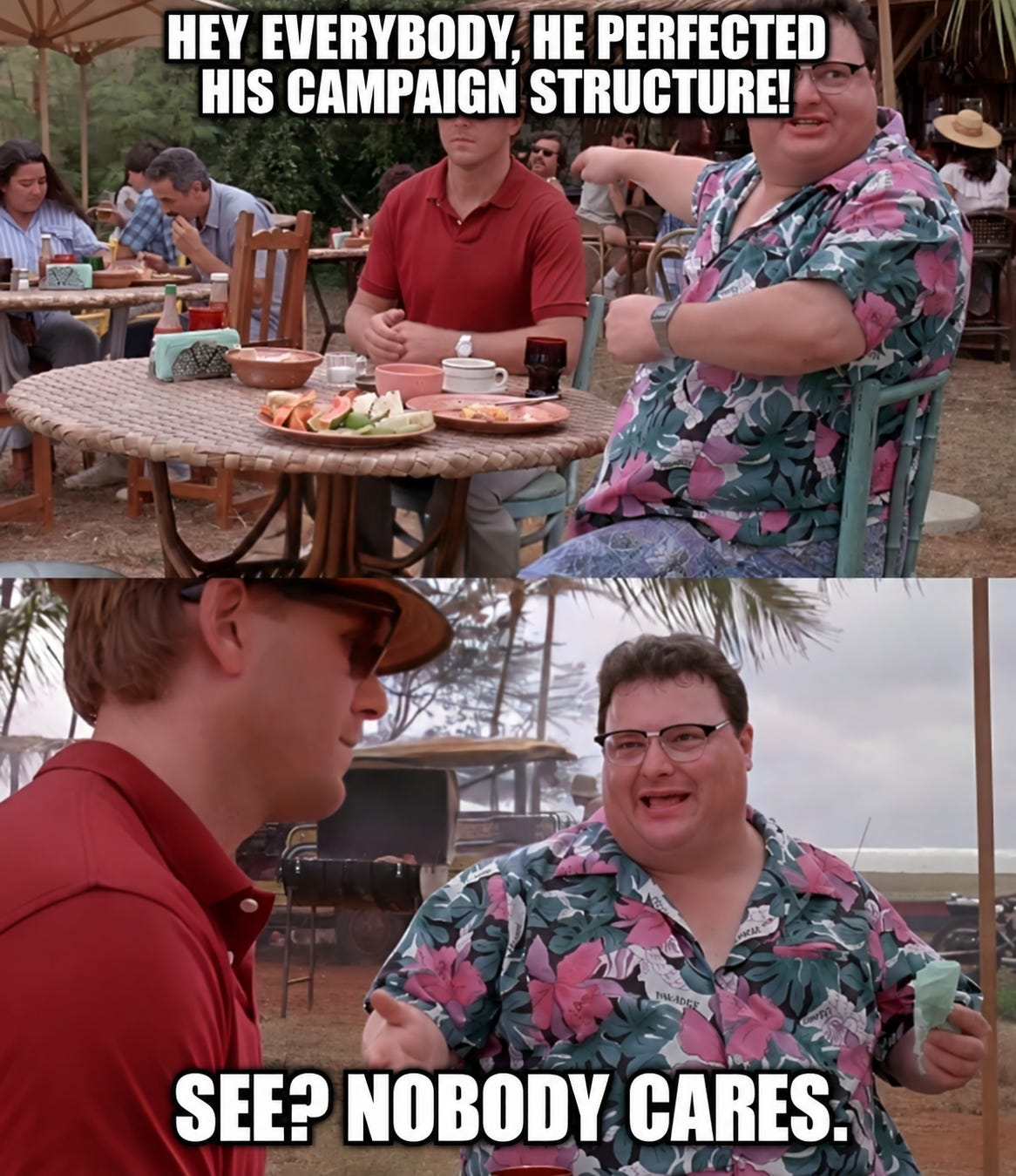
Some new ads course. Some account structure. Some secret optimisation that would unlock all this cash and make it fall from the sky.
None of that matters. Well, 90% of it doesn’t.
The creative is the thing that matters.
The creative is how you actually target people. It’s the messaging and the visuals.
You do not want to focus on the technology.
You want to focus on the psychology.
And this is truer now than it was five years ago, because the platforms have automated the part everyone used to compete on. They’ve put AI on the media buying.
Media-buying skill has a short shelf life now.
Creative doesn’t.
It’s a challenge I face myself, and where I spent weeks
I learned this the expensive way.
I had an account where the numbers were going the wrong direction. Clicks were expensive. CPMs were through the roof.
And I did what everyone does when that happens: went into the account and started pulling levers. Structure, bidding, audiences, budgets.
Nothing moved.
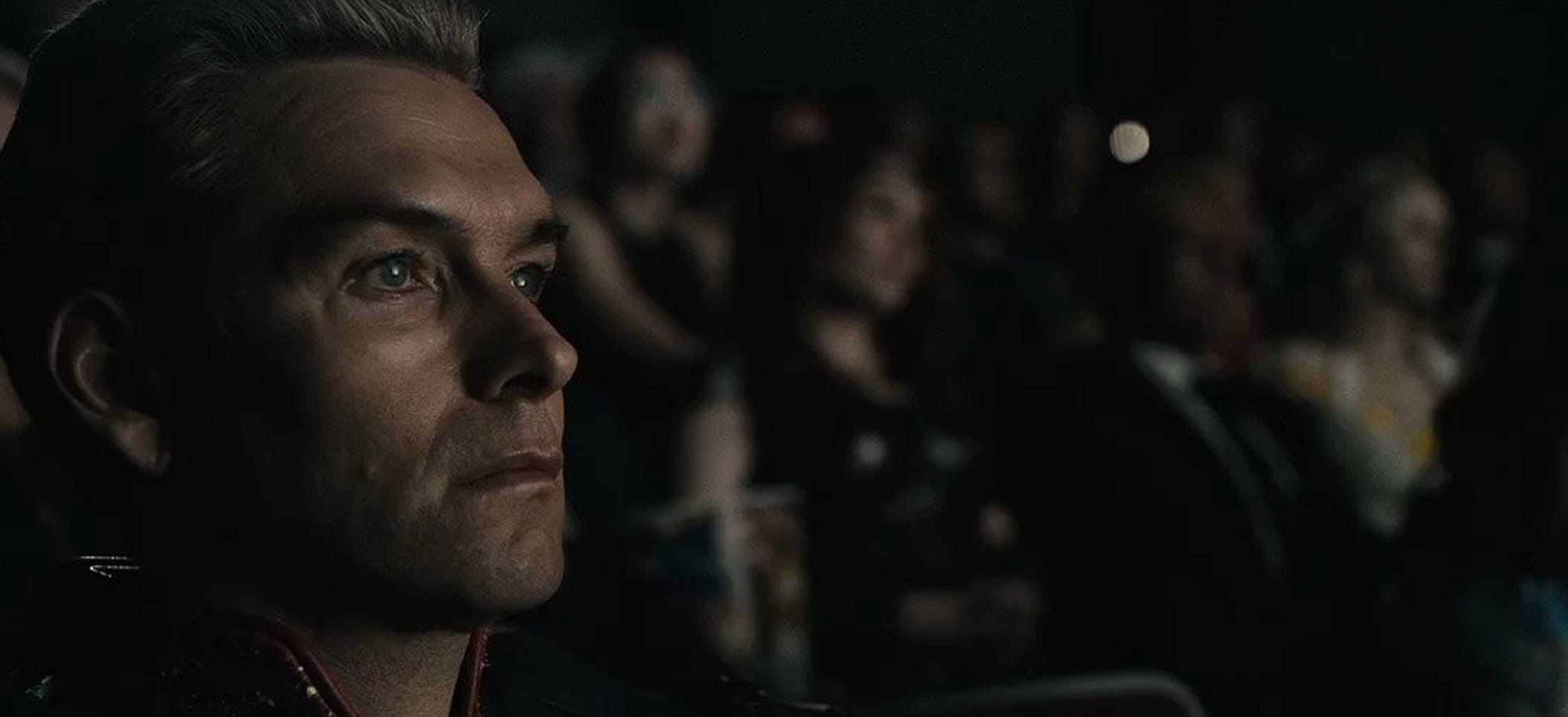
Then I stopped and looked at which creative had actually performed, took the best of it, and refreshed everything around it.
Cost per lead almost halved.
Not from a new campaign structure.
Not from a bidding strategy.
From new creative built on what was already working.
Most ads are rice soup
There are tens of thousands of ads that never get clicked.
Why?
Because most ads are like rice soup.
No flavour, no seasoning, just boiled rice and water.
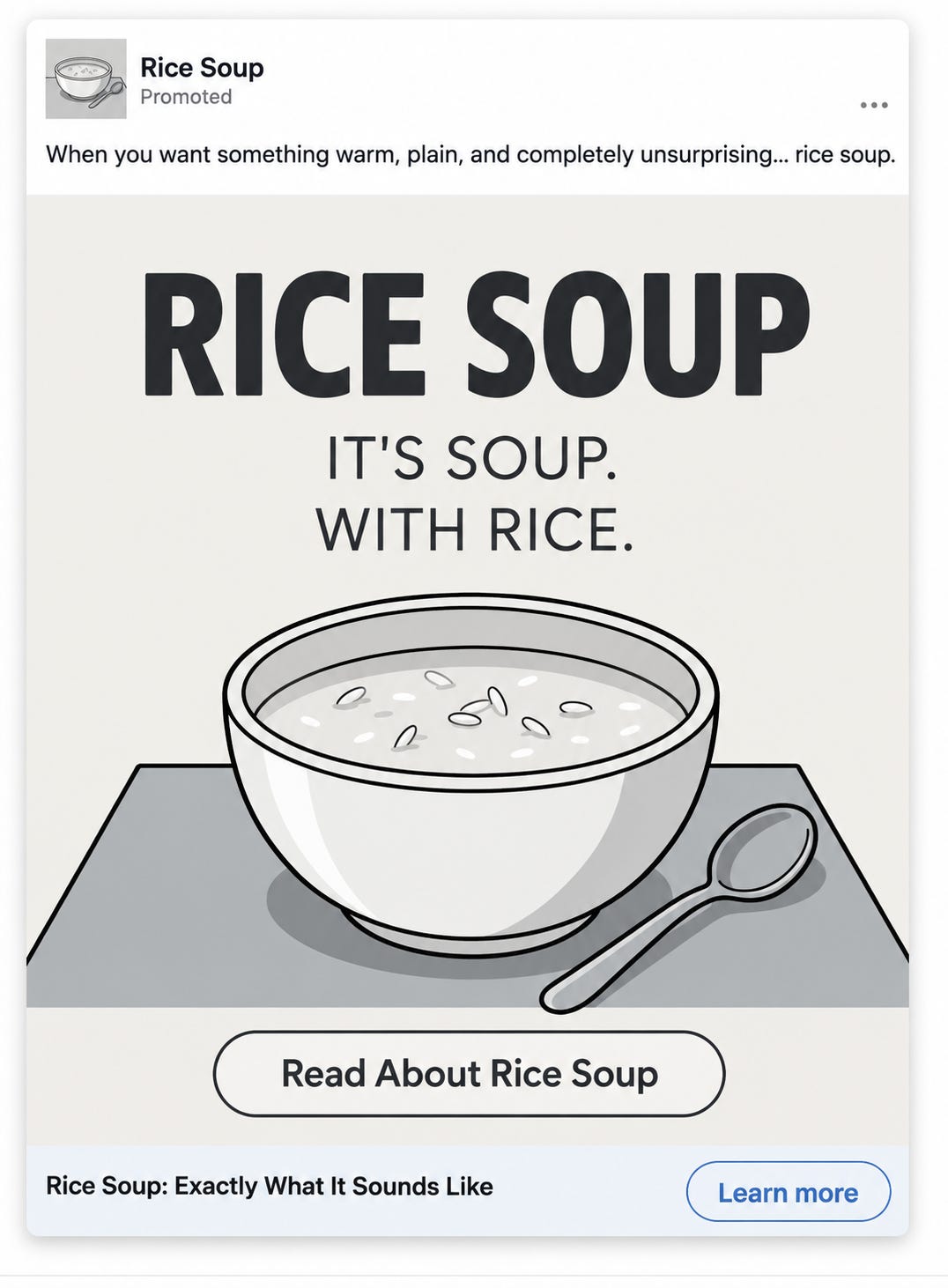
If you go out there and say “this is what I’ve got to sell,” you’ll be one of those ads that gets ignored.
And you’ll pay a premium on every CPM for the privilege.
So you need to be polarising.
Being all things to all people is the fastest way to become invisible.
In the chaotic blizzard that is the internet, we don’t earn attention.
We hijack it. Then we earn the right to keep it.
And the first rule of fight club is to not make an ad look like an ad.
The second someone sees that little “sponsored” label, they scroll faster. You do it. I do it. The platforms know it.
Humans have around 50,000 thoughts a day, most of them repeats. The brain is an efficient pattern-recognition machine and it knows it’s a waste to relearn what it already knows.
Unless you do something different, you get filed under “seen it” and skipped.
That’s what a pattern interrupt is for. New, novel or disruptive breaks the pattern. Familiar doesn’t.
The framework for a killer ad
Three things. Every ad, every time.
1. Pattern interrupt. The lead-in copy and the image both. It needs to look unusual and make someone think “what’s going on here?”
2. Big specific benefit. Not a vague improvement. A specific one.
3. Burning intrigue. Behind the headline and behind the creative.
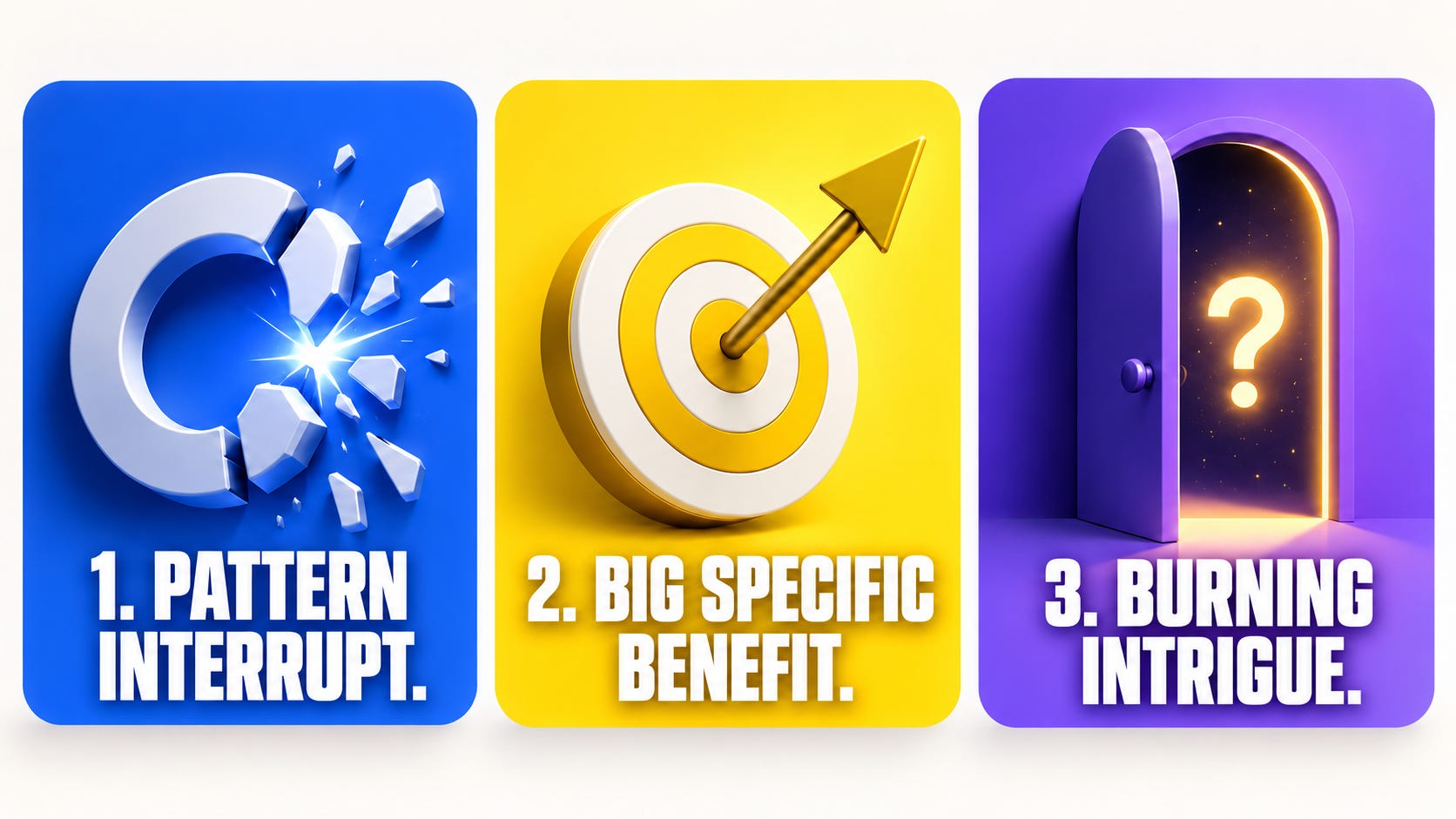
Get all three and your CPM drops.
The platforms monitor everything: how long people hover, how many hit “see more,” how many share it.
Disproportionate engagement signals to the algorithm that the ad is good, and good ads get cheaper distribution.
People only stop and read if it’s different.
Which raises the obvious question. If creative is the whole game, where do good creatives actually come from?
The best ads are public
Here’s the thing most people never use.
Both Meta and LinkedIn have public ad libraries. You can see every ad a company is running, and more importantly, you can see the date it started running.
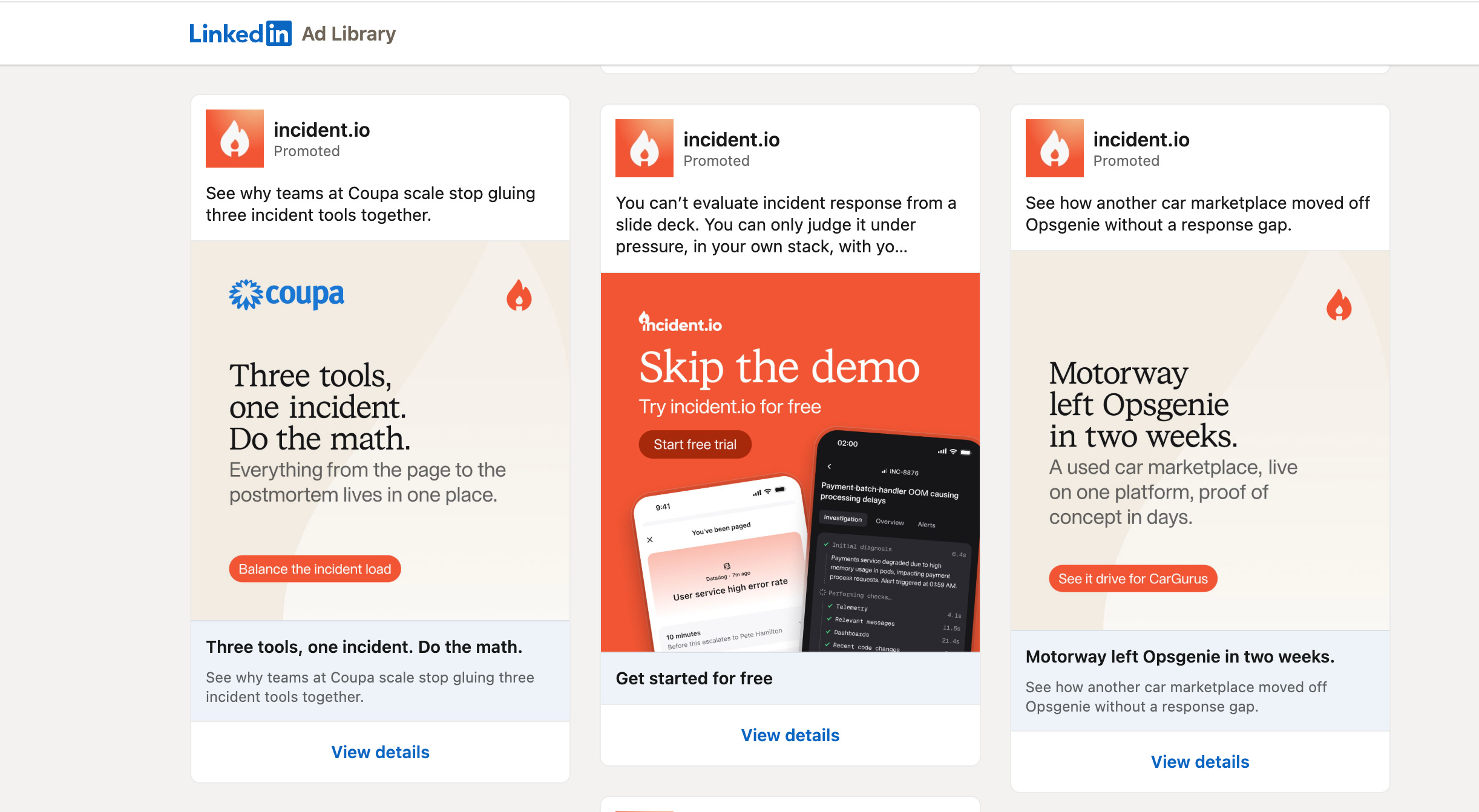
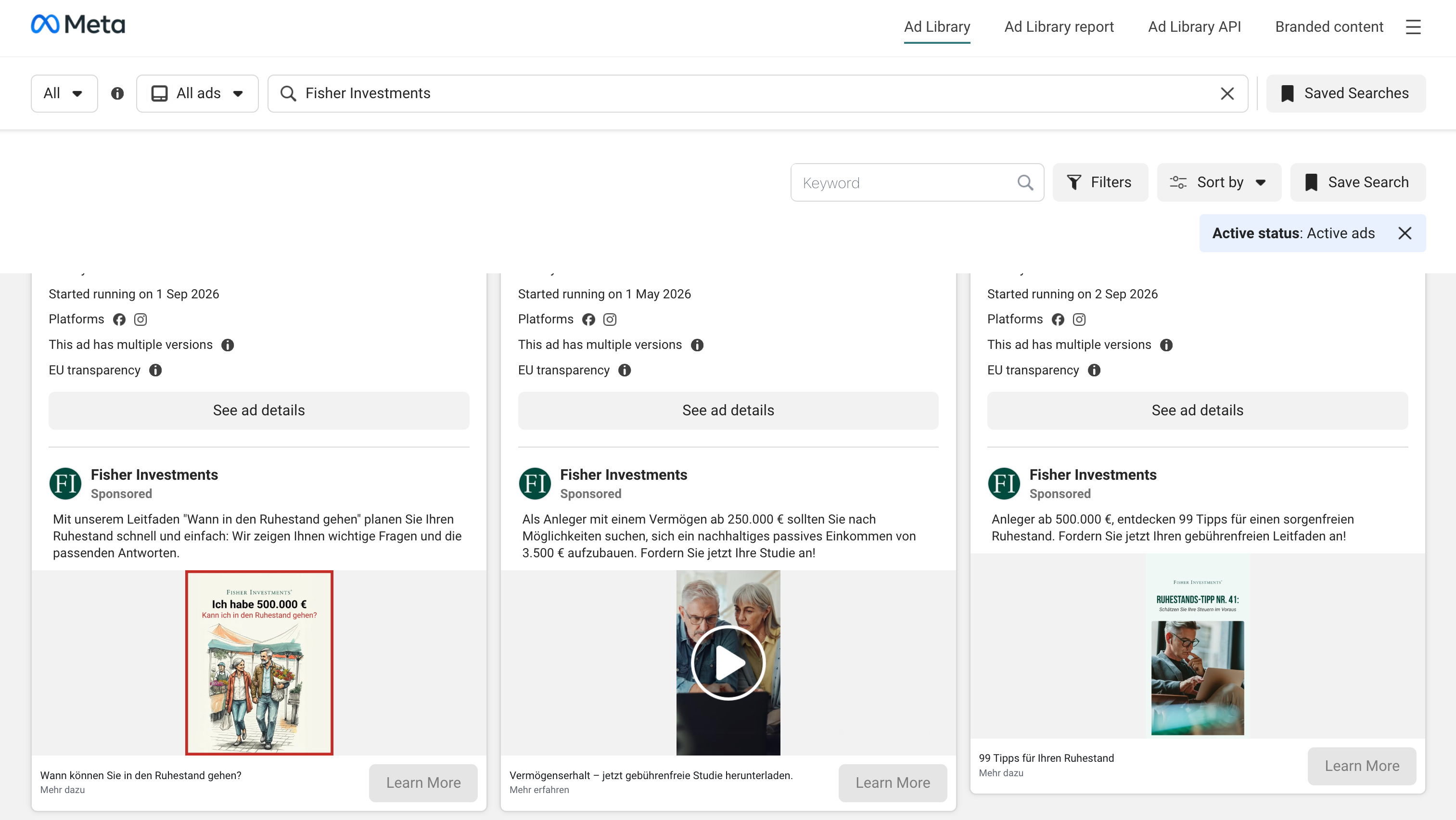
You can’t see spend. You can’t see performance. But you can see duration.
And an ad that’s been running for three months or more is almost certainly working. Nobody keeps paying to serve a loser that long.
So that’s your filter. Anything live for 90 days or more goes in the screenshot folder.
Then upload the lot to whichever LLM you use and ask it to find the patterns.
That’s it. That’s the whole trick. You’ve reverse-engineered a category’s winning creative using nothing but public data and one prompt.
But there are two ways to run this, and most people only do the first.
Route one: your direct competitors.
Obvious, useful, and where everyone starts.
You’ll find the hooks that keep reappearing, the proof points the category leans on, the objections everyone is handling.
The problem is that this is how categories end up looking identical.
If every B2B security brand is studying every other B2B security brand, you all converge on the same blue gradient, the same padlock icon, the same “protect your business” headline.
Copying the category makes you competent. It doesn’t make you different.
Route two: B2C, and industries nothing like yours.
This is where the leverage is.
B2C brands compete for attention in a far more brutal environment than B2B does.
They’re fighting for a slice of the same feed as Netflix trailers, memes and people’s actual friends.
They’ve had to get genuinely good at stopping the scroll, because nothing protects them.
B2B ads are shielded by low expectations. Everyone’s ad is boring, so a boring ad doesn’t stand out as boring.
Which means the highest-leverage move available to a B2B marketer is to bring B2C craft into a category that has never seen it.
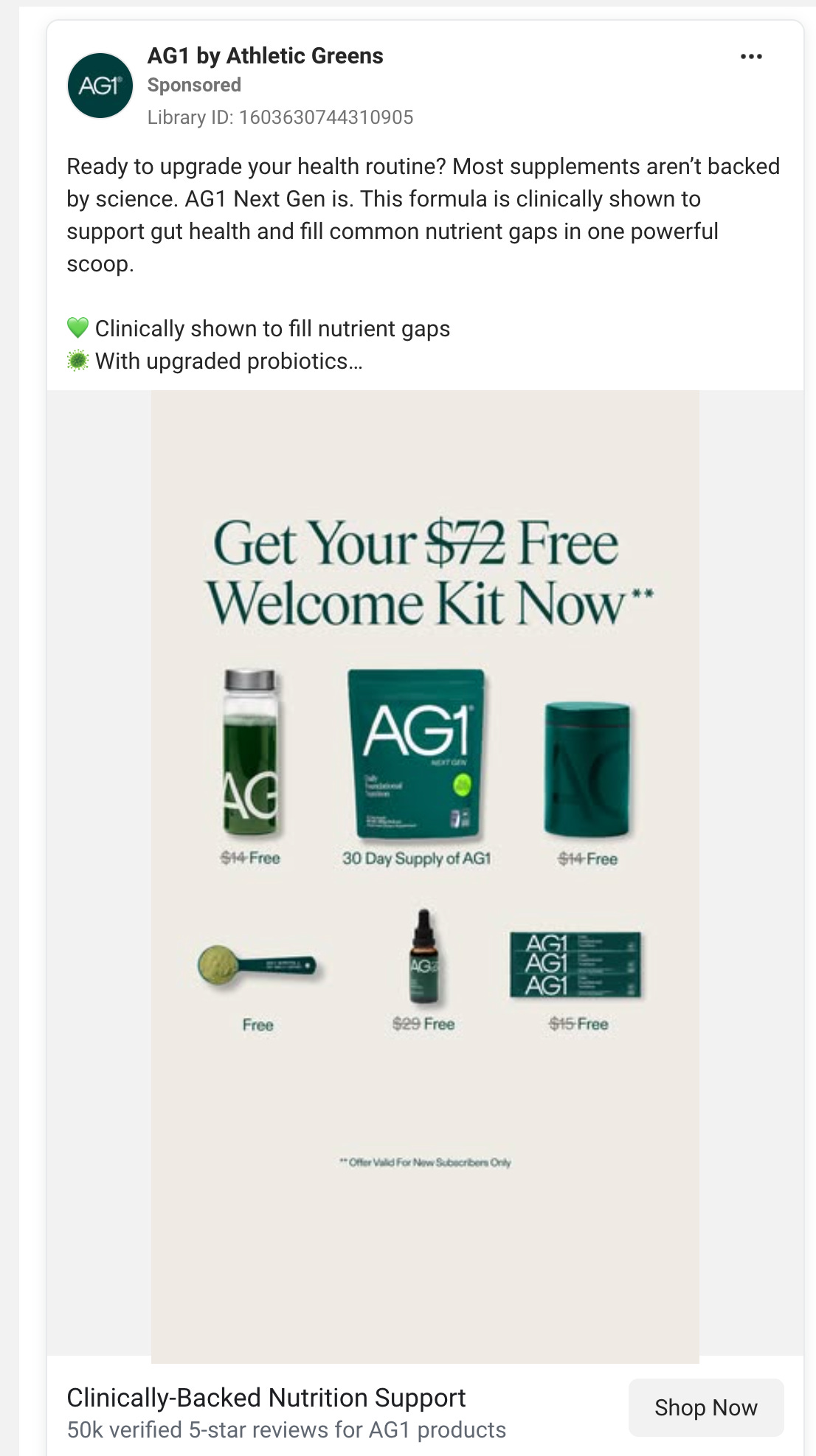
So screenshot the DTC skincare brands. The energy drinks. The fitness apps. The food delivery ads. None of them are your competitors and that’s the point.
Then ask a different question of the AI. Not “what do these have in common” - take this promt:
Here are ads from [category]. Identify the structural and psychological techniques they use to stop the scroll. Then suggest how each technique could be applied to [my product] for [my audience], without copying the visual style.You’re stealing the mechanism, not the look. The mechanism travels between industries. The look doesn’t.
Then do it slowly, by hand, once a week
The bulk analysis gives you patterns. It doesn’t give you taste.
For that, I do something separate and much slower.
Every week I pick one screenshot and take it apart. Same 4 questions, every time:
What made me stop? Was it the headline? The hook?
What’s the weirdest choice they made, and why does it work?
What would the safe, boring version of this look like?
What’s the one specific move, word or choice I’d steal?
Question 3 does the most work. Most people never ask it.
But when you write out the boring version next to the real one, you can see exactly what the creator chose not to do, and that’s usually where the whole thing lives.
After eight or ten of these, patterns show up everywhere. You start recognising those moves in the wild before you’ve consciously analysed them.
That’s when taste kicks in. And taste is the thing the AI can’t give you.
Getting the creatives out
1. Start with a winning template. Don’t reinvent anything. Use proven layouts from high performers. This is what your Ad Library screenshots are for.
2. Lean on pattern interrupts. Bold colours. Red, green, yellow, strong contrast. Skip the dull stock photos.
3. Use memes and pop culture. Humour makes the ad relatable and less salesy. Adapt what’s trending and tie it to your offer.
4. Test variations. Different colour schemes. Product in use, results, testimonials. Keeps the algorithm happy and prevents fatigue.
5. Duplicate and tweak. Canva Pro spins hundreds of variations from one idea.
Now scale what’s already winning
Once you’ve got winners, yours or theirs, you stop starting from a blank page.
Start with the headline. The headline carries most of the weight in any given ad.
Take a headline that’s already working and run this:
Give me 10 variations of this Meta ad headline. Make it compelling, ultra specific and very direct. Each headline should include a big benefit and burning intrigue. Limit it to 45 characters. Here’s the example headline: [X]Then the 11 words that do the heavy lifting.
There are 11 words that can triple response on a Meta ad.
Is it the headline? The creative? The call to action?
No. It’s the lead-in copy. The first 10 to 15 words.
The trick is to start with a quotation. A hair-on-fire question, or a real problem your audience is desperate to solve.
Reddit is a goldmine for this. Lift the exact phrasing your market is already using and put it at the front of your ad. Testimonials work the same way.
Change nothing else and watch what happens:
Give me 10 variations of this opener to a Facebook ad. Make it visceral, ultra specific and very direct. Limit it to 11 words. Here’s the example opener: [X]Now you’ve got a stack of headlines and a stack of lead-ins. That’s your combinations.
The rules every ad has to follow
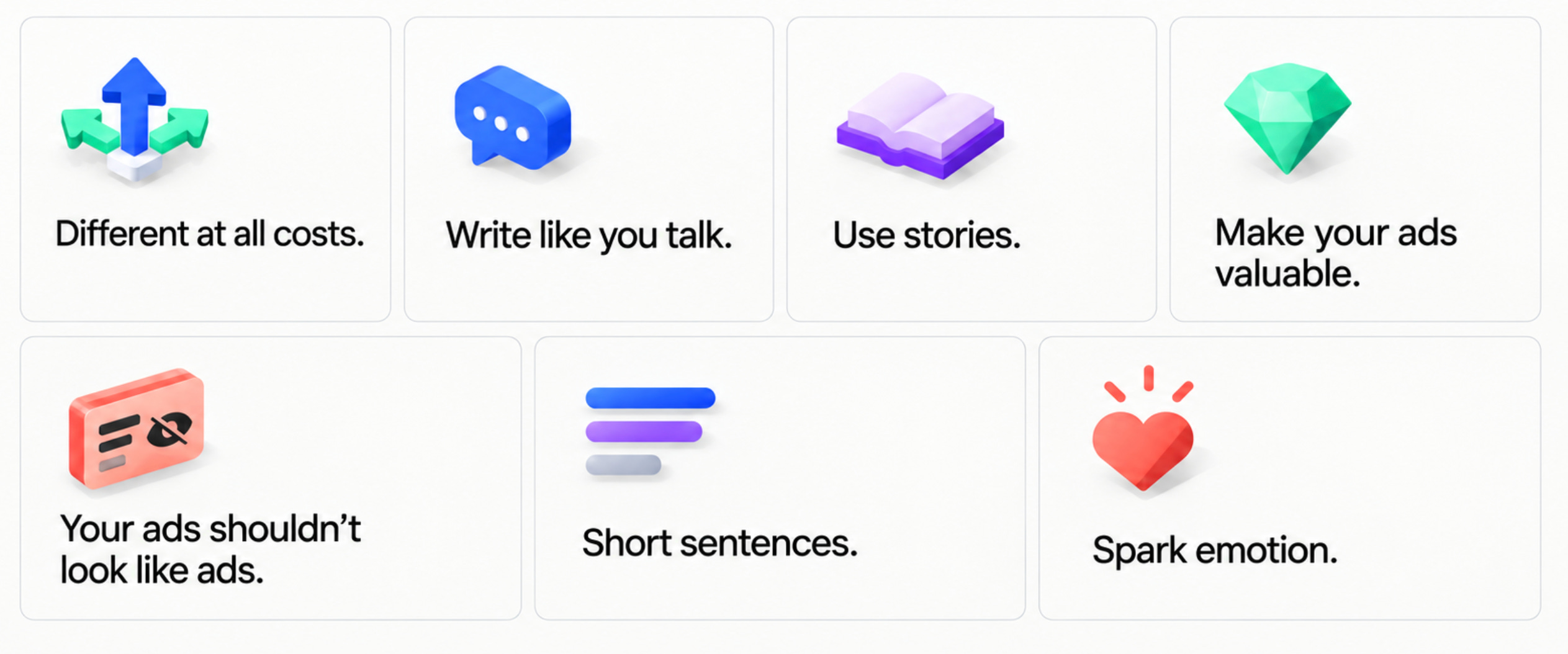
Different at all costs.
Write like you talk.
Use stories. Don’t name your company. Speak as a user, or in first person.
Make your ads valuable. The first sale is for someone’s attention. Over-deliver on it. If the ad is valuable by itself you get shares and reach for free.
Your ads shouldn’t look like ads. They should blend into the platform and get likes.
Short sentences. Five to ten words.
Spark emotion. That’s what gets the comment, the share, the click.
Two more that are easy and almost nobody does.
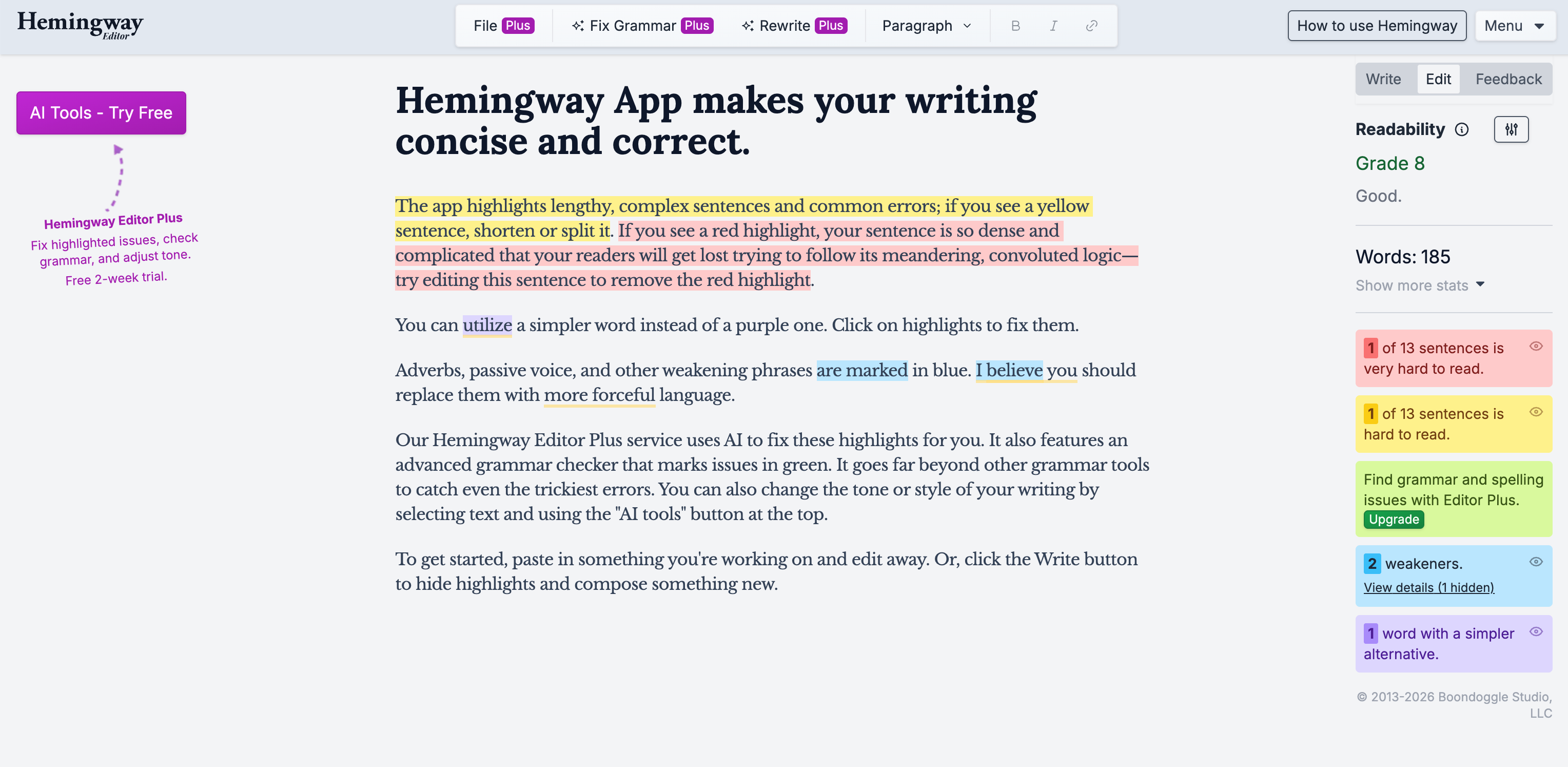
Readability. Run your copy through the Hemingway Editor. It’s free. Aim for a fourth-grade reading level or below, and break the copy up, because people are reading this on a phone. Consumption precedes conversion. If you did nothing else, this alone bumps conversions.
One rule about the AI
The internet hates AI slop.
If it’s 100% AI generated, people can tell, and they’ll roast you for it.
So one rule: AI is for starting projects. People are for finishing them.
The library analysis, the variations, the bulk generation, all of that is the AI’s job. The judgment about which one to launch is yours. That’s what the weekly five questions are training.
Don’t make ads. Create campaigns.
Instead of sitting down and thinking “I need a new ad,” ask what the whole campaign looks like for the next 90 days.
Shoot multiple hooks for the same ad. Then instead of dumping everything out as one big promo, take all the assets and drip them across the quarter.
Work in sprints rather than living on the treadmill.
The part that actually matters
Here’s what I believe more than anything else in this.
One good hook is worth more than a thousand words of masterful copy.
If you can’t hook someone in this environment, it doesn’t matter how strong the rest of your copy is, how good the offer is, or what you’re charging.
And 80% of copywriting is knowing what to say. The other 20% is how you say it.
The winning is in understanding your prospect better than anyone else in your market, so you can articulate their problem better than they can.
There’s no such thing as a boring product. Just boring marketing.
There’s a war on for attention.
The question is what weapons you’re bringing.
Are you serving rice soup?
Till next time,